Showing posts with label Seal Kit. Show all posts

Tuesday, February 3, 2026

What do you mean by "bleeding" your jack?

A manual pallet jack is usually bled by pumping the handle up and down the hydraulics with the jack unloaded and the control in the lower position until all air is purged and the lift becomes firm.

Why would I need to do this?

Air can seep into the hydraulic system. This could be caused by improper handling, such as tilting the pallet jack. When air gets into the system, it hinders the hydraulics from working and the pallet jack won’t lift anymore. Bleeding your jack releases the air.

And how do I bleed my jack?

Safety and prep

Park the pallet jack on a flat, stable floor and block the wheels so it won't roll.
Remove any load.

Bleeding


This is the procedure for most standard jacks (no opening screws):
  • Set the operating lever to “lift.”
  • Push the handle all the way down until it stops.
  • Move the lever to “lower.”
  • With the lever held in “lower,” pump the handle up and down vigorously 10–20 times.
  • Return the lever to “neutral” or “lift” and test lifting the empty forks. If lift has improved, test with a light load.

Repeat the sequence several times if the first cycle only partially improves lift.

What do I do if the jack still will not lift?

Set the lowering valve to its lowest setting, remove or open the reservoir fill plug, and verify the fluid is up to the correct level; top up if low.

After refilling, cycle the handle 10–20 times with the control in “lower” to purge any remaining air.

If it still won't lift, you may have worn seals, a faulty valve, or internal damage that requires a new seal kit or professional service: Email your pallet jack brand and model, and an outline of your problem, to csinfo@genericparts.com and we will provide technical help.


Friday, May 1, 2020

Common Replacement Parts for Electric Lift Trucks and Forklilfts


Common Replacement Parts
for Electric Lift Trucks and Forklifts

Tip: Less machine downtime = more productivity, and a better ROI over your equipment's life cycle.


  • Have you got a leak? Most common leak points are hoses. Check hoses for cracked rubber and exposed wire structure. Make sure the contact points are properly sealed.  Generic Parts Service carries a huge inventory of hosesindustrial seal kits, and lift truck seal kits. We have kits for the leading manufacturers of pallet jacks, material handling equipment, dump trucks, farming equipment, and logging equipment.

  • Are you having travel or lift issues? Check for leaks, cracks, and wear. We have seal kits, mast parts and everything you need to get moving.
  • Are you having electrical issues, including problems with buttons, switches, pedals or other electrical parts? Make sure wires are not broken or chafe against each other. Switches can mechanically break or corrode. We have a large selection of buttons, boards, switches, wiring harnesses, and pedals as well as many other commonly replaced items.


  • Are your important safety features, like horns, alarms, and lights in good working order? Some of these wear over time, but most suffer damage. Check your warehouse for obstructions and damage points. Install the accessories inside the overhead guard or within the body of the machine. If broken: We have all of these accessories and more to keep your equipment up to safety standards.


  • Are your seatbelts and seats in good working order?  In most cases, the entire seat assembly (seat belt, seat) needs to be replaced to fix the reported issue.  We have aftermarket replacement seats and seat belts for a wide variety of machines.
  • How is the condition of your frame and undercarriage? Making sure your frame and undercarriage are in good working order maximizes worker and product safety as well as the working life of your equipment. We have bushings, tension bars, link assemblies, riser assemblies and more to keep you operating safely.
  • Have you replaced your batteries but they are still having trouble charging up? Battery life should be roughly 5 years but many factors can influence that. Make sure your battery has enough water and check regularly. We have replacement battery chargers and battery connectors for most brands..

  • Have you inspected your wheels lately? Chunked or worn tires or load wheels? We carry wheel kits for most brands of forklifts. Kits include two load wheel assemblies with bearings pressed, along with axles and fasteners.  We also have the drive tires and caster assemblies you need.


Need parts? Find them on our website www.genericparts.com
Or call our highly knowledgeable customer service staff (800) 331-0839


Generic Parts Service is the world's largest supplier of after-market pallet jack parts.

We go the extra mile to make sure you get what you need - fast.

Friday, April 17, 2020

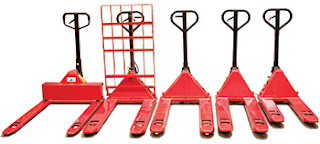
ValuJack2 - the best choice pallet jack

  • In stock right now
  • Cast iron pump with a galvanized finish for superior corrosion resistance and long term reliability
  • Poly/steel steer wheels; solid nylon load wheels with options for other wheel materials. 
  • Ergonomic rubber grip handle w/3-function hand control and foot release
  • Reinforced handle base
  • Options are available for backrests and brakes

  • Comes with a three-year limited warranty covering manufacturer's defects
  • Replacement parts always in stock.


  • Protect your feet and order your ValueJack2 with the DuraGuard Toe Guard installed! 


     Call us at 800-331-0839  or email today to order yours. 
                    Find more details and specifications on our website.

    Generic Parts, Inc.


    Monday, March 23, 2020


    COVID-19: SAFETY AT WORK


    GENERIC PARTS SERVICE wants to let you know that the health and safety of our community, our customers and our employees are of the utmost importance to us and we have enacted additional measures to ensure we meet the needs of our customers as well as provide for the health and safety of our employees while still working to provide essential services to keep the country and our supply chain rolling during this worldwide emergency.


    For those of us who are reporting to our workplaces, here are some reminders:

    • Stop handshaking – use other non-contact methods of greeting
    • Clean hands at the door and schedule regular hand washing reminders by email
    • Don't forget to wipe down your machinery anywhere you touch it
    • Social distancing - keep 3 to 6 feet away from each other
    • Create habits and reminders to avoid touching our faces and cover coughs and sneezes
    • Although gloves are protective, they are just like hands in that they harbor germs and viruses so they do need to be disinfected and don't touch your face with your gloves.
    • Disinfect surfaces like doorknobs, tables, desks, and handrails regularly
    • Increase ventilation by opening windows or adjusting air-conditioning
    • Be careful with meetings and travel, use video conferencing for meetings when possible
    • When not possible, hold meetings in open, well-ventilated spaces
    • Consider adjusting or postponing large meetings or gatherings
    • Assess the risks of business travel
    • Handle food carefully
    • Limit food sharing
    • Practice strict hygiene and stay home if you are feeling sick or have a sick family member in their home


    And to help you keep on rolling, GENERIC PARTS offers

    · Quality replacement parts for Electric Lift Trucks and Manual Pallet Jacks

    · Pre-packaged Wheel Kits for Manual Pallet Jacks, Electric Lift Trucks & Scissor High Lifts


    And helpful How-to-Videos:


    For free technical assistance:

    Call our helpline 800-331-0839 or email csinfo@genericparts.com       

    Monday, January 27, 2020

    Safely Operating A Manual Pallet Jack

    ValuJack2

    Manual pallet jacks are used in many places because they help workers move and handle heavy loads. Although manual pallet jacks are not as dangerous as forklifts, they can still cause serious injuries and property damage when operated incorrectly.
    There are many ways a person can be seriously injured when using a pallet jack.
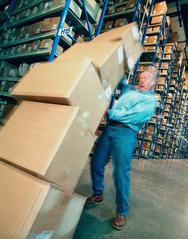
    • Loads can topple from tight turns, excessive speed, uneven floors and or inclines, causing contusions, abrasions, strains, and sprains.
    • Injuries and property damage occur when the load or pallet jack runs into walls, door jams, columns, shelves or run into other employees.
    • Injuries can occur when workers trip over the exposed pallet jack forks.
    • Back strain or shoulder strains from adjusting heavy loads or pulling the pallet jack.
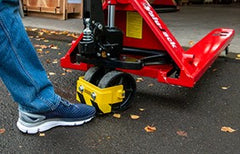
    • A common but serious injury can occur when the pallet jack runs over and crushes the feet of the operator or anyone nearby.
    How can you prevent on the job injuries from operating pallet jacks? Here are just a few suggestions.
    • Establish and post clear safety rules.
    • Know your equipment. Never operate a pallet jack without being fully trained in safe operating procedures.
    • Never exceed the load capacity of the pallet jack.
    • Consider using a jack that has a brake and or back-rest especially when moving loads on an incline.
       ValuJack2 with backrest and brake
    • Wear proper foot and hand protection.  Keep your back strong and straight.
    • Use proper lifting procedures when loading, operating and unloading the pallet jack.
    • Inspect your pallet jacks regularly to make sure they are in good operating condition.
    • Never place feet, hands or any body part underneath a pallet or pallet jack.
    • Use a Toe Guard to reduce injuries to feet from pallet jacks rolling over the operator’s foot.
    • No horseplay! Do not ride the equipment or carry riders on your manual pallet jack.
    • Push, don’t pull! Pulling puts more strain on the back, shoulders, arms, and legs. The exception is when making small adjustments in the positioning of the load.
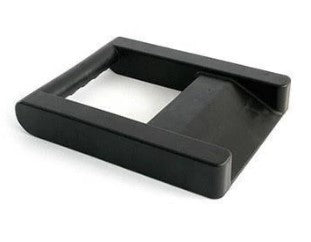
    • Use a pallet jack stop to prevent the jack from rolling out of control especially on an incline.

     Pallet Jack Stop

    You can depend on Generic Parts Service for:

    Order today at www.genericparts.com

    Tuesday, December 17, 2019

    Battery chargers and connectors for your electric Lift Trucks

    Check your batteries, battery chargers, and connectors.

    When using battery chargers, always check the AC and DC Cables, plugs, contact tips, and connectors for damage, exposed copper, and signs of excessive heat.
    And to ensure the proper function of your batteries:
    • Check the cell water levels and add water as needed. 
    • Wipe down the top of the battery with a neutralizer as needed.
    • Inspect the batteries, including the cables, connectors, contact tips, cell tops, inter-cell connectors, and watering systems for signs of physical damage, excessive heat or corrosion.   
    Our vast inventory includes
     Battery Connectors
     
    and
     Battery Chargers
    
    Browse our selection of electric lift truck Battery Chargers and Battery Connectors by Crown, Hyster, Raymond, Toyota, Yale, and others.
    Need help finding the right battery charger for your model?
    or
    call us at 1-888-999-7715
    We've got over 200,000 new replacement parts for
    And more!

    Wednesday, March 27, 2019

    Your pallet jack is not lifting properly? Or only half way?

    Bleeding the air out of the hydraulic unit is the first step to solving this problem.

    The main reason for having air in the hydraulic system is that you have a bad seal that is sucking air in, or the jack was upside down.

    All you need is an Allen wrench and a few minutes to watch the step-by-step video:


    • Put the jack on a flat level surface and pump it all the way up. Release and retract all the way down.  
    • Open the filler plug on the side of the cylinder with the Allen wrench. (Do not remove the screws on the base!) 
    • The location of the plug is significant because it indicates the proper fluid level. It may hiss a little as you unscrew the fill plug.  
    • Look into the hole and make sure the level is good. It should be right up to the fill plug hole. If it's low, top it off. Most jacks take about 1 pint of oil.
    • Screw the plug back in.
    • Put the handle release on the up position and pump the jack 10-12 times completely up and down to cycle out any air that is in the system. 
    • Then place the lever on the handle into the down position and test the jack. It should work noticeably better. 
    Anything broken? Or need replacement parts?
    Call us at 1-800-331-0839, or order through our website www.GenericParts.com 24/7.  


    Have you checked out our other  "How-To" videos? 
    Here are some customer favorites:

    How-to videos:

    Pre-packaged cost-effective load wheel kit

    Order and Save ...

    ... Time with Same-Day Shipping
    ... Money with Free Shipping on Orders over $450*

    Once you have your parts, our support doesn't stop there!
    Any suggestions? Any repair or maintenance you would like to see in a video? Leave a comment here or send an email to csinfo<at>genericparts.com. 
    We always appreciate feedback.


    *Commercial ground shipping within Continental US Only. Some items excluded

    Monday, March 12, 2018

    Seal Kits - Do you need them? Why are there so many?

    Have a pallet jack that's sinking down under a load, or it won't release when you pull the lever?  Maybe it's stuck up and won't come back down to Earth. Whatever the issue is we have some tips to help you identify the cause and the parts to get you moving.

    One way to trouble shoot a unit that will not lower all the way, or that you are unable to get full handle strokes is to rule out air in the system. It's quick and easy!  All you need to do is Pump the handle 15-20 times while activating the release lever.  Make sure you remove the fill cap first!  This is where the air will escape from. If oil is coming out while you are working through this process it's an indicator that you are not fully in release mode.


    If your lift sinks down under a load, you can unhook the chain from the release pin and allow the pin to come out of the valve.  This allows the ball to seat, and may remedy the issue.  If not, it can be an indicator that the valve is honed out and no longer creates a tight seal when the ball seats.


    If you have a unit that will not go down, check the release rod and make sure everything is moving freely.  Do the same on the underside of the jack.


    Sometimes you just need to do a tear down of the hydraulic unit and rebuild it with a seal kit. Every manufacturer originally included a variation of different parts.  We have found in many cases that there are additional parts that should be replaced at the same time.  Below are outlined the differences between a super seal kit, standard and slim seal kit. 


    Slim seal kits include only the most essential and commonly replaced seals. A cost saving option if you know what you need. A Standard or Super seal kit is a better choice if a complete hydraulic unit rebuild is necessary.


    Standard seal kits have all of the parts included in the manufacturers' standard seal kit.


    Super seal kits contain all parts that are included in a standard seal kit, as well as the most commonly needed parts beyond the standard seal kit to do a complete hydraulic unit rebuild.


    When doing the repair, we encourage you to disassemble one section at a time and line up the pieces in the order you take them out.  This will save your you-know-what when you go to install the new pieces.


    If you need help deciding which kit to get you can take advantage of our unmatched Customer Service. Our staff has the knowledge and experience to help you with technical problems and even assist with identifying mystery jacks.  (See this post for more on that!) We also track model changes so you can be sure to receive the correct part the first time you place an order.


    On select units we have the Rebuild hydraulic unit program  available also. Email or call us today (800)331-0839!