Showing posts with label Manual Pallet Jack Parts. Show all posts

Monday, September 9, 2024

Basic troubleshooting for your pallet jack

Your jack is not working properly. So now what?

Here are some tips for basic troubleshooting:

If your jack is not lifting, the first thing to try is to bleed the pump: hold the lever in the release position like you are lowering the jack, and pump the handle about 10 times. This will recycle any air that is still in the hydraulic unit out of the valve and back into the reservoir where it should be.


Bleeding should resolve most lifting problems.

If the jack is still not lifting, the second thing to do is check your oil level. Carefully remove the fill plug to be able to see your oil level. For most brands of pallet jacks, the reservoir shouldn't be filled. The oil level should be about an inch to an inch, i.e., a half below the top.

Are you still having problems? To determine whether the problem is in the pump, or the handle, disconnect the lifting linkage from the lever. Make sure the lever moves freely and it's not sticking to anything. Now try to pump your handle. If the jack raises, you know your problem is in the handle or the linkage. If the jack does not raise, and you have confirmed that the problem is in the pump,  most likely the valve.

Here we show a valve replacement

If the trouble is in the handle, here you can follow along on how to adjust a handle

and here we show how to install a handle


The see all these tips, here is a troubleshooting video for an AC series pallet jack.

If your problem persists with the pump, you might have to rebuild the hydraulic unit. This is a more involved process, which you can follow (shown on a Crown PTH) here.

And finally, if you need parts for your pallet jack, but need to know what brand or model it is, take a picture of the side view of the hydraulic unit like we show you here, and text us the picture. We'll identify it for you!

And remember, your jack is your workhorse! Always inspect your jack regularly, never exceed the load capacity, and wear proper hand and foot protection, to name a few basic safety precautions.

And, of course, always visit Generic Parts Service for your replacement parts. We recommend always having an extra wheel kit on hand. And we always ship the same day (if ordered before 6pm EST).


Quality replacement parts for
Fast Lift Parts is the world's largest supplier
of after-market pallet jack parts.

Order today at www.genericparts.com

800-331-0839     *      csinfo@genericparts.com

We go the extra mile
to make sure you get what you need
- fast.


Tuesday, June 20, 2023

Which Load Wheels Are the Best?

Everyone wants to know what is the best load wheel to use for their pallet jack or electric lift truck.  

Polyurethane (Poly)

Ideal for display floors, carpeting, and warehouses. They mark floors the least while rolling easily and quietly.

Ultra-Poly

Longer lasting and they roll more easily than regular poly. Ultra-poly is very hard and won't shatter if too cold, and they are also non-marking.

Nylon

A harder material that is best for cold storage applications. It is also the material of choice for use in environments that may cause rust or corrosion like poultry processing, and working with seafood.   

Steel Wheels

These are best for use on factory floors where there may be metal shavings or hard debris on the floor, and where noise is not an issue.

One or two?  

Replacing the whole load wheel bracket is more time consuming and expensive than choosing two wheels during regular maintenance.

Because we so strongly advocate changing both at the same time we created wheel kits, and they are priced at a substantial discount.  


Quality replacement parts for


When the time comes for replacing parts you can refer to our step-by-step video instructions.

You can find any parts you might need on our website or call us 800-331-0839.

 Email us at csinfo@genericparts.com 

Friday, April 17, 2020

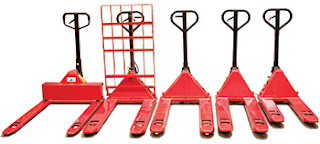
ValuJack2 - the best choice pallet jack

  • In stock right now
  • Cast iron pump with a galvanized finish for superior corrosion resistance and long term reliability
  • Poly/steel steer wheels; solid nylon load wheels with options for other wheel materials. 
  • Ergonomic rubber grip handle w/3-function hand control and foot release
  • Reinforced handle base
  • Options are available for backrests and brakes

  • Comes with a three-year limited warranty covering manufacturer's defects
  • Replacement parts always in stock.


  • Protect your feet and order your ValueJack2 with the DuraGuard Toe Guard installed! 


     Call us at 800-331-0839  or email today to order yours. 
                    Find more details and specifications on our website.

    Generic Parts, Inc.


    Monday, January 27, 2020

    Safely Operating A Manual Pallet Jack

    ValuJack2

    Manual pallet jacks are used in many places because they help workers move and handle heavy loads. Although manual pallet jacks are not as dangerous as forklifts, they can still cause serious injuries and property damage when operated incorrectly.
    There are many ways a person can be seriously injured when using a pallet jack.
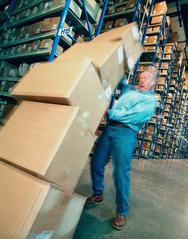
    • Loads can topple from tight turns, excessive speed, uneven floors and or inclines, causing contusions, abrasions, strains, and sprains.
    • Injuries and property damage occur when the load or pallet jack runs into walls, door jams, columns, shelves or run into other employees.
    • Injuries can occur when workers trip over the exposed pallet jack forks.
    • Back strain or shoulder strains from adjusting heavy loads or pulling the pallet jack.
    • A common but serious injury can occur when the pallet jack runs over and crushes the feet of the operator or anyone nearby.
    How can you prevent on the job injuries from operating pallet jacks? Here are just a few suggestions.
    • Establish and post clear safety rules.
    • Know your equipment. Never operate a pallet jack without being fully trained in safe operating procedures.
    • Never exceed the load capacity of the pallet jack.
    • Consider using a jack that has a brake and or back-rest especially when moving loads on an incline.
       ValuJack2 with backrest and brake
    • Wear proper foot and hand protection.  Keep your back strong and straight.
    • Use proper lifting procedures when loading, operating and unloading the pallet jack.
    • Inspect your pallet jacks regularly to make sure they are in good operating condition.
    • Never place feet, hands or any body part underneath a pallet or pallet jack.
    • Use a Toe Guard to reduce injuries to feet from pallet jacks rolling over the operator’s foot.
    • No horseplay! Do not ride the equipment or carry riders on your manual pallet jack.
    • Push, don’t pull! Pulling puts more strain on the back, shoulders, arms, and legs. The exception is when making small adjustments in the positioning of the load.
    • Use a pallet jack stop to prevent the jack from rolling out of control especially on an incline.

     Pallet Jack Stop

    You can depend on Generic Parts Service for:

    Order today at www.genericparts.com

    Thursday, October 17, 2019

    THE HOLIDAYS ARE COMING


    Get your jacks ready for the busy season with this checklist

    Here are five important items for your checklist to make sure your warehouse is prepared.
    1. Check your warehouse floors and outdoor loading areas to make sure the workplace is clean and clear of any obstacles. Make sure that debris and spills are cleaned and swept up so that your operating environment is safe for your equipment to operate in. Debris and spills can ruin or shorten the life of your wheels or get in the way of your loads. 


    2. Inspect the wheels on your pallet jacks and forklifts regularly to make sure that they are rolling easily and that there are no flat spots or delamination. Over time, the poly or rubber on your wheels can crack or wear unevenly resulting in unstable and unsafe loads. This can cause additional stress on your machine and on your workers' hands and arms due to vibration and rolling instability. We offer convenient wheel kits for manual pallet jacks and electric lift trucks


    3. Have you looked at the forks lately?  Make sure there are no cracks or damage as the forks bear the brunt of the load. Using a damaged jack can cause a load to shift and fall and may damage products or cause injuries to your workers.

    4. Check the hydraulic pump for leaks and make sure that it is operating properly. Does it pump up and hold your load? Does it lower safely? 


    5. Test the handles, levers, controls, and horn where applicable, so that you are confident everything is working properly before you add a heavy load. 


    Check our website for replacement parts you need, and contact us for any technical support.
    Here is a list of instructional videos of the most common pallet jack repairs:

    Monday, September 30, 2019

    IDENTIFY YOUR PALLET JACK


    You called Generic Parts because your pallet jack needs some work. But the label or data plate is missing or it has been painted over and you just don’t know what make or model you have. Or perhaps it was imported or re-branded and you are not finding the parts information you need.
    You are in luck because most manual pallet jacks can be identified by the hydraulic pump on the pallet jack. The hydraulic unit is the main identifying point on any manual pallet jack. 
    Generic Parts has line drawings for many of the most common pallet jack on our website to help you compare and identify your pallet jack model.
    Perhaps you have looked at the line drawings but are not quite sure. We can help you identify your pallet jack!
    Email a side view picture of the hydraulic unit to csinfo@genericparts.com
    Text your photo to our dedicated text line - 503-523-8990.
    Be sure to let us know what information you have on the jack and what parts you are looking for. Then we can respond with parts information and if possible a quote. And you can always call us for assistance during our normal business hours 6 AM to 4:30 PM PDT at our free technical helpline: 
    1-800-331-0839

    Still not sure? Just watch this video:

     How to identify your pallet jack


    Save... 
    ...Time with same-day shipping
    ...Money with FREE shipping on orders over $450*
    When did you last replace the wheels on your pallet jack

    www.genericparts.com

    Wednesday, March 27, 2019

    Your pallet jack is not lifting properly? Or only half way?

    Bleeding the air out of the hydraulic unit is the first step to solving this problem.

    The main reason for having air in the hydraulic system is that you have a bad seal that is sucking air in, or the jack was upside down.

    All you need is an Allen wrench and a few minutes to watch the step-by-step video:


    • Put the jack on a flat level surface and pump it all the way up. Release and retract all the way down.  
    • Open the filler plug on the side of the cylinder with the Allen wrench. (Do not remove the screws on the base!) 
    • The location of the plug is significant because it indicates the proper fluid level. It may hiss a little as you unscrew the fill plug.  
    • Look into the hole and make sure the level is good. It should be right up to the fill plug hole. If it's low, top it off. Most jacks take about 1 pint of oil.
    • Screw the plug back in.
    • Put the handle release on the up position and pump the jack 10-12 times completely up and down to cycle out any air that is in the system. 
    • Then place the lever on the handle into the down position and test the jack. It should work noticeably better. 
    Anything broken? Or need replacement parts?
    Call us at 1-800-331-0839, or order through our website www.GenericParts.com 24/7.  


    Have you checked out our other  "How-To" videos? 
    Here are some customer favorites:

    How-to videos:

    Pre-packaged cost-effective load wheel kit

    Order and Save ...

    ... Time with Same-Day Shipping
    ... Money with Free Shipping on Orders over $450*

    Once you have your parts, our support doesn't stop there!
    Any suggestions? Any repair or maintenance you would like to see in a video? Leave a comment here or send an email to csinfo<at>genericparts.com. 
    We always appreciate feedback.


    *Commercial ground shipping within Continental US Only. Some items excluded

    Monday, July 9, 2018

    Which load wheel is best?

    You need wheels for a pallet jack. 

    Have you ever gone online or studied a catalog and thought "Aren't all pallet jack wheels the same?" or "I have no idea what I need!"? Or maybe you service pallet jacks and the wheels just are not lasting as long as you (or the person paying the bills) would like?

    In this post, we are going to take a look at the different load wheel options we offer, and their pros and cons.

    Load Wheel Options;

    Polyurethane and Ultra-Polyurethane treads are the most common wheel treads you'll encounter on a pallet truck.

    Polyurethane (Poly) Tread WheelsThese have a chemical bond that secures the poly tread to a steel core (or hub). This option is ideal for display floors, carpeting, and warehouses. They mark floors the least while rolling easily and quietly. Under really heavy loads (2,500lb +), if left to sit more than 8 hours, there is a possibility of the wheels flat spotting.  


    Ultra-Poly Wheels: Longer lasting and they roll more easily than regular poly, also a chemical bond on a steel core. Ultra-poly is very hard and won't shatter like nylon if too cold (i.e. in and out of a freezer). They are also non-marking with the possibility of flat spotting, as mentioned above.

    red Ultra-Poly Load Wheel with bearings


    Nylon Wheels: This is a harder material that is best for cold storage applications. It is also the material of choice for use in environments that may cause rust or corrosion like poultry processing, and working with seafood. It can also be the best choice for refrigerated transport trucks that have the grated floors. Lastly, they can be a good choice if the pallet truck is taken outside on rough pavement. These are however more likely than poly to mark floors, so be mindful when using inside a showroom or a hotel lobby, for example.

    White solid nylon load wheel with bearings


    Steel Wheels: When all else fails you may need solid steel wheels. These are best for use on factory floors where there may be metal shavings or hard debris on the floor, and where noise is not an issue. What they lack in their ability for use in a sneak attack (they’re pretty loud) they make up for in sheer durability. These are also a good choice if you need to work outside on rough asphalt. But they can damage nice floors, so avoid use on floors you want to remain "pretty". 

    Solid steel load wheel with bearings


    One Wheel or Two?

    Now that you've got an idea of which type of wheel is best for your specific uses you are faced with another sometimes tough decision. One wheel or two?

    First, most pallet jacks have two load wheels. One load wheel is located under each fork. At times you'll have what's called a tandem assembly which means there are two wheels under each fork but they share the same bracket.

    Unless a pallet jack is brand new, we always recommend replacing both load wheels at the same time. No, we are not just trying to up-sell you! There is a legitimate benefit
    , so hang on with me for a little longer. Have you ever gone to have the tires on your vehicle replaced and told the sales guy you only wanted one? You probably got the funny squinty eyes from the sales guy for this same reason.  

    Load wheels wear down and get shorter the longer you have used them. Load wheels (like pallet jack steer wheels or the tires on your car) do not act independently but are a portion of a larger machine. Even a little difference in diameter causes stress on the mating (aka connected) parts which then causes issues down the line. One example would be of the pivot axles that are located the load wheel brackets eating through the bushings
    , or egging out the holes in that bracket or where they articulate (attach) in the fork frame. You may not notice there is an issue until something breaks, or you go to replace that originally unchanged wheel and find you need a whole new bracket on one or both sides. 

    Trust us that replacing the whole load wheel bracket is more time consuming and expensive than choosing two wheels during regular maintenance.

    Because we so strongly advocate changing both at the same time we created wheel kits to get you everything you need, and they are priced lower than the two wheels by themselves. Here is an example - GWK-BF-LW


    GWK-BF-LW


    Extra Resources

    Here are some more links you may find handy as you venture down the road of replacing your load wheels


    Have a suggestion for a future blog post?  

    Need help ordering parts from www.genericparts.com?  

    Give our friendly Customer Service team a call at 800-331-0839 or e-mail us at csinfo@genericparts.com 


    Wednesday, May 30, 2018

    Safely turn over a jack

    Sometimes we encounter a question like "Is routine maintenance really needed on a pallet jack?" The simple answer is yes, routine maintenance is important when it comes to getting the most out of your pallet jack.  Depending on the size of your operation a pallet jack may be replaceable or it may very well be an integral part of the the livelihood of your whole company.  Where ever you may land in the spectrum we can all agree throwing money away through lack of maintenance can negatively impact the bottom line. 

    Most of the parts you'll need to keep an eye on are found in the underbelly of the unit. We want to give you practical instructions on how to safely to get to the underside of your pallet jack for two reasons.  First,  let's get rid of a potential excuse to put off the inspection for lack of know-how.  Second, because the breaking toes, twisting of wrists or damaging of the pallet jack defeats the goal to support your bottom line. (No one wants a Worker's Comp Claim).

    The best way to turn over your pallet jack and expose the undercarriage keeps you and your equipment safe. We've created a line of instructional 'How To' videos and below you'll find a link to one on safely flipping over a manual pallet jack.  


    YouTube - How to flip your jack.


    Once you have it turned over and still have full use of all your fingers and toes the next question is "What should I be looking for?"

    Start with the Pallet Jack Wheel Inspection (Load and Steer)
    Measure the Wheel diameters. Are they worn down 0.25” or more from new?  (I.e. 3” diameter load wheel worn to 2.75” or 7” diameter steer wheel worn to 6.75”)

    Is there excessive debris embedded in the wheel tread or chunks of the polyurethane tread material missing?

    Are there strings or other material wound around the axle preventing the wheel from turning freely?

    Do you see visible cracking of the steer wheel hub around the bearing?

    Always replace both load wheels or steer wheels even if only one wheel meets the
    criteria for replacement.

    Inspect the entry rollers. If they do not turn freely or are visibly damaged, replace.

    We recommend performing the above inspection every 6 months


    Be sure to check out Generic Parts Service YouTube channel for more 'How To' Videos:


    Remove load wheels 

    Install load wheels

    Replace the load wheels on a pallet jack

    Turn the manual jack back upright

    Replace the steer wheels on a manual pallet jack

    © Copyright 2016, Generic Parts Service Inc.